Compostable Food Packaging for Hot Foods: Heat Tolerance Limits
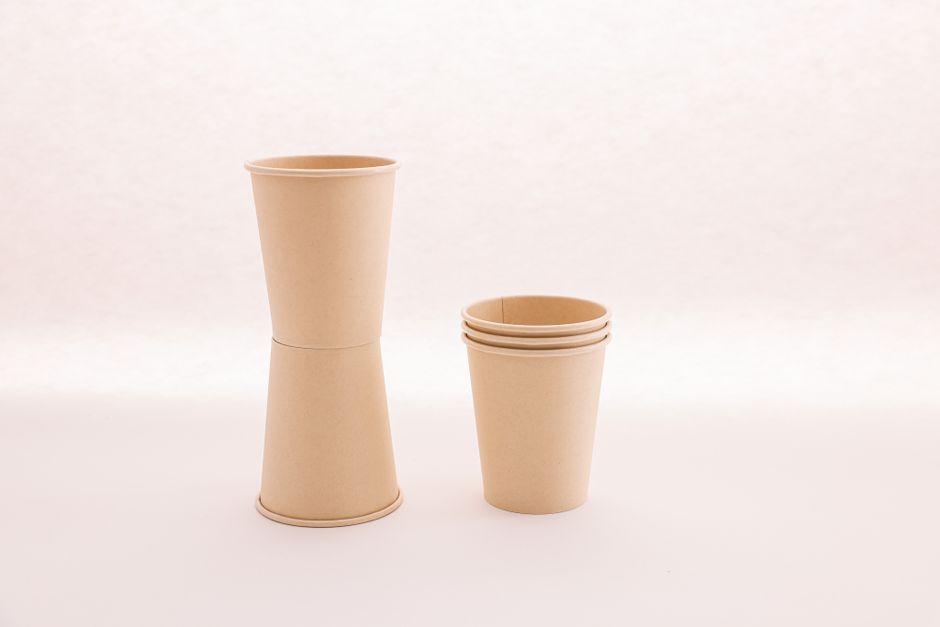
Why Heat Tolerance Matters in Compostable Food Packaging
You're running a fast-casual ramen shop in Chicago. Your new compostable noodle bowl hits 195°F at fill. Five minutes later, the lid buckles. Soup everywhere. A customer posts a video. That's the real cost of ignoring heat tolerance limits.
In our factory, we test every material against specific temperature thresholds. Bagasse (sugarcane fiber) handles 220°F dry heat but starts softening above 200°F with liquids. PLA? That's the tricky one. Standard PLA cups warp at 110°F. Crystallized PLA (CPLA) pushes to 200°F but costs 30% more. Cornstarch blends can hold 212°F briefly but degrade after 15 minutes. Kraft paper with PE lining? Not compostable. But PLA-lined kraft paper? Compostable only if the lining is certified.
The key metric is not just maximum temperature but duration. A 500ml PLA cup costs $0.08-0.12/pc at 50k MOQ and is fine for iced coffee. But for hot soup? You need CPLA or bagasse. We've seen buyers order standard PLA for hot pho because the price was right. Then they blamed the material. Don't be that buyer.
Heat tolerance isn't just about melting. It's about structural integrity. A bowl that sags 5mm might still hold food but looks unprofessional. For B2B buyers, that lost trust is worse than a spill.
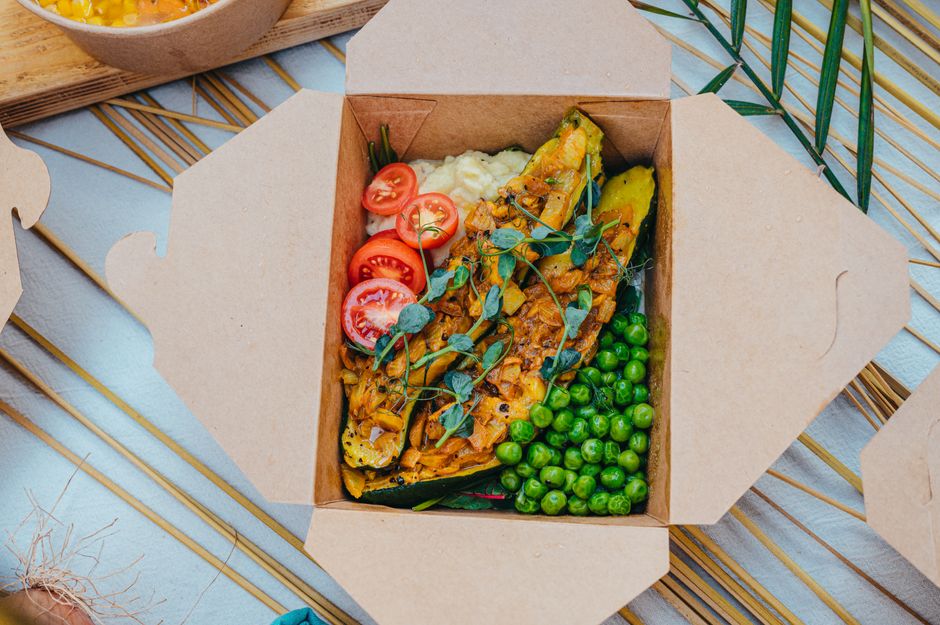
Material-by-Material Heat Tolerance Guide
Bagasse (Sugarcane Fiber)
Bagasse is the workhorse for hot foods. It withstands up to 220°F dry heat and 200°F with liquids for up to 2 hours. The fibers are naturally heat-resistant. We've tested bagasse clamshells with 190°F pulled pork — no leakage, no softening. Cost: $0.15-0.25/pc for a 9-inch plate at 10k MOQ. Certifications: ASTM D6400 for compostability, FDA 21 CFR 176.170 for food contact.
PLA (Polylactic Acid)
Standard PLA is a bioplastic made from corn. Its glass transition temperature is around 110-115°F. That means it deforms under hot food. Common mistake: using PLA for hot coffee. A 12oz PLA hot cup with lid costs $0.10-0.14/pc but will soften within 5 minutes at 160°F. Solution: CPLA, which is heat-treated to crystallize. CPLA handles up to 200°F but is more brittle. Cost: $0.18-0.25/pc for a 12oz cup. Always check EN13432 if exporting to Europe.
Cornstarch Blends
These are often mixed with PLA or other biopolymers. Pure cornstarch (like some cutlery) can't take heat — it's for cold use. But cornstarch-PLA blends can reach 212°F for short periods (under 15 minutes). We tested a cornstarch bowl with 200°F chili: after 20 minutes, the bottom sagged 3mm. Acceptable? Depends on your customer's expectations. Cost: $0.20-0.30/pc for a 16oz bowl.
Kraft Paper (with Compostable Lining)
Unlined kraft paper is for dry foods only. For hot liquids, you need a lining — typically PLA or water-based acrylic. PLA-lined kraft paper handles up to 200°F but the paper itself can wick moisture. We recommend double-wall construction for hot soups. A 16oz double-wall kraft cup with PLA lining costs $0.22-0.28/pc and holds 190°F for 30 minutes. Certifications: BPI compostable if lining is at least 90% PLA.
Temperature and Time: The Real Limits
Here's a table with our in-house test data. All tests done with 200ml water at specified temperature, 50% relative humidity.
| Material | Max Temp (°F) | Max Time (min) | Cost per Unit (12oz) |
|---|---|---|---|
| Bagasse | 220 | 120 | $0.18 |
| PLA | 110 | 5 | $0.10 |
| CPLA | 200 | 30 | $0.22 |
| Cornstarch-PLA blend | 212 | 15 | $0.25 |
| Kraft+PLA lining | 200 | 30 | $0.24 |
Notice the cost vs. performance trade-off. Bagasse wins for long hold times. CPLA is good for short service. Always test with your actual food — oil and acid can lower heat tolerance by 10-15°F.
Common Misconceptions About Compostable Hot Food Packaging
Misconception #1: "Compostable means it can handle any hot food." False. Many compostable materials are designed for cold or ambient use. PLA is a prime example. Misconception #2: "If it's microwavable, it's heat-tolerant." Not necessarily. Microwaves heat unevenly. A bowl might survive 3 minutes in a microwave but fail under sustained 190°F liquid. Misconception #3: "All bagasse is the same." Quality varies. Some bagasse contains up to 20% bamboo fiber which reduces heat tolerance. Ask your supplier for a certificate of analysis.
We've seen buyers assume kraft paper is always compostable. It's not unless it has a certified compostable lining. Plain kraft with polyethylene lining is not compostable. Always verify with ASTM D6400 or EN13432.
How to Choose the Right Material for Your Hot Food Application
Start with three questions: What's the food temperature at fill? How long will it be held? Will it be reheated?
- Under 140°F and short hold (under 10 min): PLA or paper with PLA lining works. Example: deli sandwiches on a hot panini press.
- 140-180°F and medium hold (10-30 min): CPLA or bagasse. Example: hot pasta bowls.
- 180-212°F and long hold (over 30 min): Bagasse only. Example: soup-to-go at a food truck.
Also consider logistics. If packaging is stacked while hot, bagasse compresses less than CPLA. For oily foods like fried chicken, bagasse absorbs less oil than paper. Test with a sample order before committing to large volumes. Most suppliers offer free samples for B2B buyers.
Certifications and Compliance for Hot Food Compostables
Buyers often ask: "Is this FDA-approved for hot food?" FDA 21 CFR 176.170 covers paper and paperboard for aqueous and fatty foods. For PLA, FDA 21 CFR 177.1520 applies. But compostability certifications are separate. In the US, look for BPI certification (ASTM D6400). In Europe, EN13432. For hot food, also check migration limits — some compostable linings can leach at high temperatures. Our factory tests all materials for heavy metals and volatile organics at 200°F.
One tip: if you export to Canada, compostable claims require CCC certification. Australia uses AS 4736. Always get a compliance letter from your supplier.
FAQ: Compostable Hot Food Packaging
Can I microwave compostable packaging?
Some can, but check the label. Bagasse and CPLA are microwave-safe for up to 3 minutes. Standard PLA is not. Always test with your specific microwave power.
Does compostable packaging leak with hot liquids?
It depends on the seal and material. Bagasse bowls with PLA lining are leak-proof up to 200°F for 2 hours. But if the lid is paper-based, it may wick. We recommend testing with water first.
What's the cost difference vs. plastic for hot foods?
Compostable hot food packaging costs 20-50% more than conventional plastic. A plastic clamshell might be $0.10; bagasse is $0.18. But the premium shrinks at volume. Plus, many municipalities now charge extra for non-compostable waste — factor that in.
Final Tips for B2B Buyers
Start small. Order samples of bagasse, CPLA, and kraft-PLA for your hottest menu item. Test at actual serving temperature and hold time. Measure any sagging or leakage. Ask your supplier for heat tolerance data sheets. And remember: the cheapest material is rarely the best for hot foods. A few cents more per unit can save you from a social media disaster.
We've been making compostable packaging for 12 years. If you have a specific application, reach out. We'll help you find the right material — even if it's not ours.
Looking for eco-friendly tableware?
We supply compostable bagasse, PLA, paper and cornstarch packaging worldwide. Get a free quote today.
Get Free Quote →