Compostable Packaging for Coffee Shops: Hot Cup Lids & Stirrers
Why Should Coffee Shops Switch to Compostable Hot Cup Lids and Stirrers?
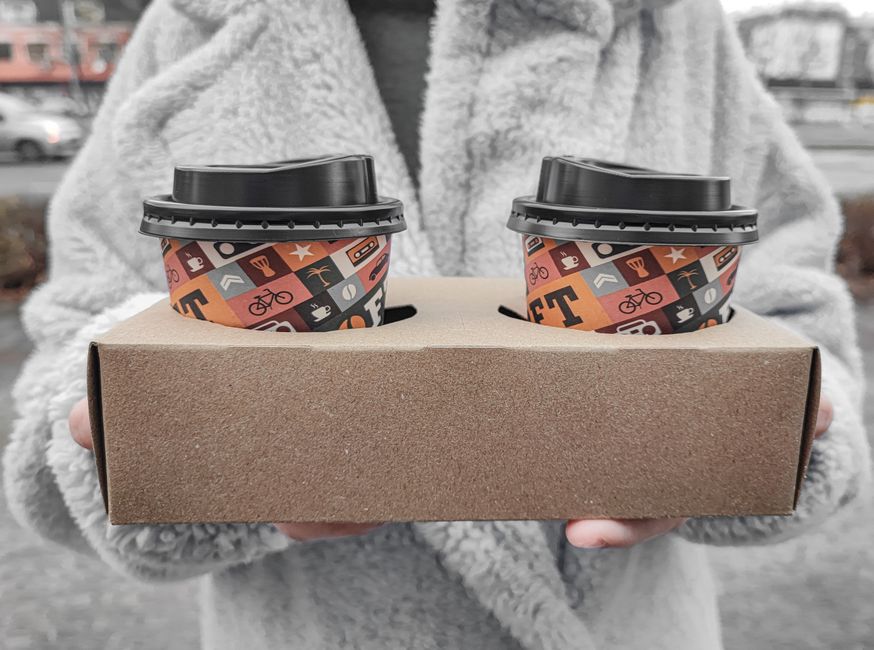
Single-use plastics are under fire. Coffee shops face pressure from customers, regulators, and their own conscience to reduce waste. Compostable lids and stirrers offer a direct replacement for petroleum-based versions. They perform the same function—keeping your coffee hot and your drink stirred—but break down in commercial composting facilities. For a shop serving 300 cups daily, switching to compostable lids can divert over 100,000 plastic lids from landfill each year. And it's not just about ethics; it's good business. A 2022 survey by the National Coffee Association found that 58% of consumers under 40 would pay more for coffee from an environmentally responsible café.
What Materials Are Used for Compostable Coffee Cup Lids?
Most compostable lids are made from PLA (polylactic acid), a bioplastic derived from cornstarch or sugarcane. PLA lids are clear, rigid, and fit standard paper hot cups (sizes 8oz to 24oz). They are certified compostable under ASTM D6400 or EN 13432. However, PLA requires industrial composting conditions—temperatures above 140°F for 60+ days—and will not degrade in a backyard pile. Some manufacturers blend PLA with other biopolymers to improve heat resistance. A typical 90mm PLA lid costs $0.04–0.07 each at 50,000 MOQ.
Another option is molded fiber lids made from bagasse (sugarcane fiber) or bamboo. These are opaque, have a natural texture, and are often lined with a thin PLA coating for moisture resistance. Fiber lids are more heat-tolerant (up to 200°F) but can be less airtight. They are typically 20–30% more expensive than PLA lids but feel more natural and are accepted by some home composters. For stirrers, common materials are birchwood, bamboo, or PLA. Wooden stirrers are inexpensive ($0.01–0.02 each) and naturally biodegradable, while PLA stirrers cost slightly more but offer a plastic-like feel.
Are Compostable Lids Heat-Resistant for Hot Coffee?
This is the #1 concern for coffee shop owners. PLA lids typically have a maximum service temperature of 105–115°F (40–46°C). That's fine for iced coffee or warm drinks, but hot coffee is brewed at 195–205°F and served at 160–180°F. A standard PLA lid can soften or warp under those conditions. The solution? Use heat-resistant PLA (HR-PLA) or a blend like PLA with PHA or talc. HR-PLA lids can withstand up to 200°F without deforming. Our factory tests every lid batch at 185°F for 30 minutes to ensure no softening.
For fiber lids, heat resistance is less of an issue—bagasse lids handle up to 220°F. But they can become soggy if the coffee is held for hours. A thin PLA lining solves that. Always check the manufacturer's specifications and request a sample pack before ordering. Don't rely on generic claims; ask for ASTM D6400 certification and a heat test report.
How Do Compostable Stirrers Compare to Plastic Ones?
Plastic stirrers are cheap, strong, and inert. Compostable alternatives have to match that performance. Wooden stirrers (birch or bamboo) are the most common. They are sturdy, splinter-free if sanded properly, and break down in any compost environment. A 5.5-inch birch stirrer costs about $0.015 each (50,000 qty). PLA stirrers are identical to plastic in feel and strength but cost $0.02–0.03 each. The catch: PLA stirrers must go to industrial compost, while wood can go to backyard compost or even landfill and still degrade.
Some coffee shops report that wooden stirrers can leave a slight woody taste if left in the drink for a long time. To avoid this, use coated wooden stirrers (with a thin PLA or wax coating) or switch to PLA. We recommend testing both with your baristas and customers. In our experience, most customers prefer the natural look of wood, but some miss the bright colors of plastic. You can offer both and let them choose.
What Certifications Should I Look For?
Certifications are critical to prove your claims and avoid greenwashing. For compostable lids and stirrers in North America, look for BPI (Biodegradable Products Institute) certification, which confirms compliance with ASTM D6400. In Europe, the standard is EN 13432, often marked with the Seedling logo. For food contact safety, FDA 21 CFR 176.170 applies to paper and paperboard, and 21 CFR 177.1520 for olefin polymers (which covers PLA). Our factory provides a certificate of compliance for every shipment.
Be wary of vague terms like "biodegradable" or "eco-friendly" without certification. A common misconception is that all compostable packaging can go in any compost pile. In reality, most PLA products require industrial composting (high heat, controlled humidity). If your city doesn't have industrial composting facilities, consider fiber-based options that are certified for home composting (e.g., TÜV Austria's OK Compost HOME). Always confirm with your waste hauler what they accept.
What Are the Costs Compared to Conventional Lids and Stirrers?
Compostable options are more expensive—there's no sugarcoating it. But the price gap has narrowed. A standard plastic lid costs $0.02–0.04; a PLA lid costs $0.04–0.07. A plastic stirrer is $0.005–0.01; a wooden stirrer is $0.01–0.02. That's a 50–100% premium. For a shop using 500 lids/day, the annual cost increase is roughly $500–$1,000. However, many shops offset this by charging a small fee (e.g., $0.10) for compostable packaging or by raising drink prices by $0.05.
Bulk buying helps. At 100,000+ units, we can offer PLA lids at $0.035–0.05 each. Wooden stirrers at 200,000+ drop to $0.008. Also consider the marketing value: compostable packaging can be a differentiator. A 2023 study showed that 72% of coffee drinkers view compostable packaging positively, and 34% would switch cafés for it. That's worth more than the cost difference.
Can Compostable Lids and Stirrers Be Customized with Logos?
Yes, but the methods differ by material. PLA lids can be printed using UV flexography or silk screen. Minimum order quantities for custom printing are typically 50,000–100,000 units. The print area is limited to the top rim and sometimes the side. Fiber lids (bagasse) can be embossed or printed with water-based inks. Embossing is more durable and eco-friendly. Wooden stirrers can be laser-engraved or printed with soy-based inks. Laser engraving gives a clean, permanent mark and works well for small text or logos. Minimum order for custom stirrers is 25,000–50,000 pieces.
Our factory offers free artwork setup and a 3D mockup for custom orders. Turnaround time is 4–6 weeks for printed lids and 2–3 weeks for engraved stirrers. We recommend ordering samples of the printed product before committing to a full run.
Comparison: PLA vs. Fiber Lids vs. Plastic Lids
| Property | PLA Lid | Fiber (Bagasse) Lid | Plastic (PP) Lid |
|---|---|---|---|
| Heat Resistance | Up to 115°F (standard) / 200°F (HR) | Up to 220°F | Up to 230°F |
| Cost per unit (50k) | $0.04–0.07 | $0.06–0.10 | $0.02–0.04 |
| Compostability | Industrial (ASTM D6400) | Industrial & Home (if unlined) | Not compostable |
| Appearance | Clear, glossy | Opaque, natural texture | Clear or colored |
| Moisture Resistance | Good | Moderate (lined is better) | Excellent |
Common Misconceptions About Compostable Coffee Packaging
Myth: Compostable means it breaks down in any environment. Not true. PLA requires industrial composting (high heat, moisture, microbes). In a landfill, it may take just as long as plastic. Fiber products degrade faster but still need oxygen and moisture. Always educate your customers: "Please compost in a commercial facility."
Myth: Compostable packaging is weaker. Many buyers worry that lids will pop off or stirrers will snap. In reality, PLA lids have similar tensile strength to PP. Our factory tests show that a PLA lid can hold a 12oz cup at a 45-degree tilt without leaking. Wooden stirrers are actually stronger than plastic ones—they won't bend.
Myth: Switching is too expensive for small shops. While unit costs are higher, the total impact is manageable. A small shop using 200 lids/day spends an extra $0.50–$1.00 per day. That's $15–30/month. Many shops recoup this through a small packaging fee or by reducing waste hauling costs (since compostable waste may be cheaper to dispose of than mixed trash).
How do I dispose of compostable lids and stirrers correctly?
Check with your local composting facility. Most accept PLA and fiber products if they are certified. Do not put them in backyard compost unless certified home compostable. For stirrers, wooden ones are safe for home compost. Always provide clear signage in your shop to guide customers.
Can I use compostable lids for cold drinks too?
Yes, PLA lids are ideal for iced coffee and cold beverages. They won't soften and are less prone to condensation than plastic. Many shops use the same lid for hot and cold, but for hot drinks, use HR-PLA or fiber lids.
What's the shelf life of compostable packaging?
PLA and fiber products have a shelf life of 1–2 years if stored in a cool, dry place. Avoid high humidity and direct sunlight. Our packaging is sealed in poly bags to maintain quality. Always follow FIFO (first-in, first-out) to avoid degradation.
Looking for eco-friendly tableware?
We supply compostable bagasse, PLA, paper and cornstarch packaging worldwide. Get a free quote today.
Get Free Quote →