PHA vs PLA Cold Cups: Cost per Unit and Industrial Composting

PHA vs PLA Cold Cups: The Real Cost Breakdown
We get this question every week from buyers: "Which is cheaper, PHA or PLA cold cups?" The short answer is PLA — but that's not the whole story. Let's look at actual numbers. A standard 500ml PLA cold cup with lid costs between $0.08 and $0.12 per piece at a 50,000-unit MOQ. The same size in PHA? You're looking at $0.18 to $0.28 per piece. That's roughly double the cost. But here's what most buyers miss: PHA's price has dropped 40% in the last three years. In 2021, a PHA cup could run you $0.35+. Today, we're seeing prices approach $0.15 for large orders over 100k units. PLA is still cheaper, but the gap is closing fast.
Why the price difference? PLA (polylactic acid) is made from corn starch or sugarcane, a mature technology with massive production scale. Companies like NatureWorks produce over 150,000 tons annually. PHA (polyhydroxyalkanoate) is produced by bacterial fermentation — a more complex process. Production volumes are smaller, but new facilities are coming online. Danimer Scientific and CJ CheilJedang are scaling up. We expect PHA capacity to triple by 2026, which will further reduce costs.
But cost per unit isn't the only factor. You need to consider your end-of-life requirements. If your clients need home compostable options, PHA is your only choice among these two. PLA requires industrial composting (58°C+ for 60+ days). PHA can break down in ambient soil or marine environments. That's a huge difference for brands with strong environmental commitments.
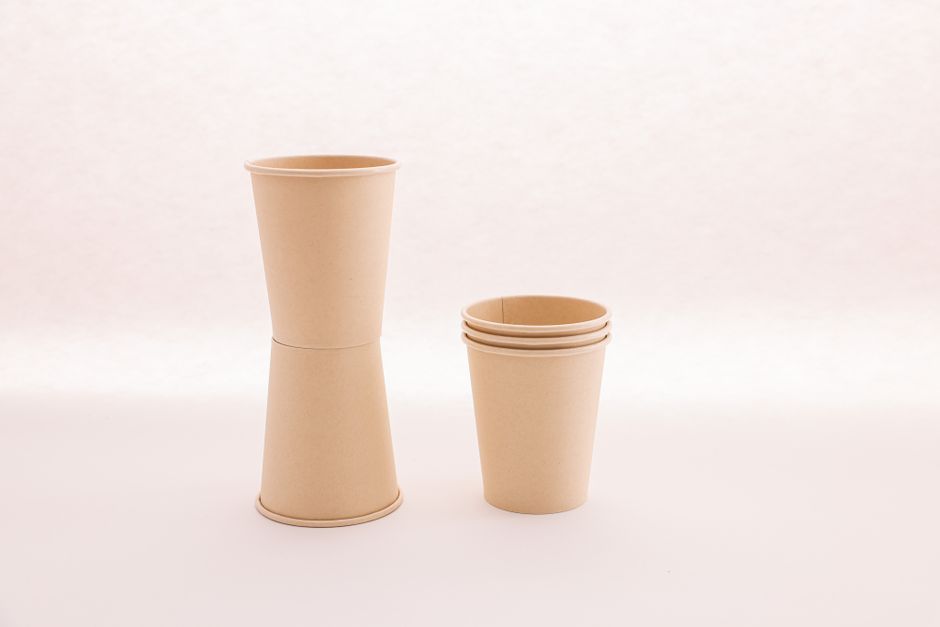
Industrial Composting Performance: PLA vs PHA
Both PLA and PHA are certified compostable under ASTM D6400 and EN13432 for industrial facilities. But real-world performance varies. In a well-run industrial composter at 58°C, PLA cups will disintegrate in 60-90 days. PHA cups typically break down in 30-60 days. That's faster — but only if the composter is properly managed. We've seen PLA cups emerge partially intact from suboptimal facilities. PHA is more forgiving; it degrades in lower temperatures and even in anaerobic digesters.
Here's a table comparing key specs:
| Property | PLA Cold Cup | PHA Cold Cup |
|---|---|---|
| Material Source | Corn starch, sugarcane | Bacterial fermentation of plant oils |
| Cost per 500ml cup (50k MOQ) | $0.08-0.12 | $0.18-0.28 |
| Industrial composting temp | 58°C+ required | 30-40°C sufficient |
| Degradation time (industrial) | 60-90 days | 30-60 days |
| Home compostable | No (rare exceptions) | Yes (if certified) |
| Marine degradable | No | Yes (some grades) |
| Heat resistance | 40-50°C max | 60-80°C max |
| Barrier properties | Good (with coating) | Moderate (needs coating) |
| Certifications | ASTM D6400, EN13432 | ASTM D6400, EN13432, OK Home |
One common misconception: many buyers think PLA is always compostable. It's not — unless sent to an industrial facility. Most PLA cups end up in landfills where they persist for decades. PHA, on the other hand, can biodegrade in soil, freshwater, and marine environments. That's a game-changer for brands worried about litter.
Performance and Shelf Life: What Buyers Should Know
Both materials work well for cold beverages (smoothies, iced coffee, water). PLA cups have good clarity and feel similar to PET. PHA cups are slightly hazy but improving. However, PLA has a major weakness: it's brittle and can crack under stress. We've had customers complain about PLA lids splitting during transport. PHA is more flexible and impact-resistant. For high-volume events or shipping, PHA might save you on breakage costs.
Shelf life matters too. PLA cups stored in cool, dry conditions last 12-18 months. After that, they become brittle and may start degrading. PHA has a longer shelf life — 24+ months — because its degradation rate is slower in ambient conditions. But both should be stored below 40°C and away from moisture. If you're a distributor with slow inventory turnover, PHA gives you more buffer time.
Barrier properties: PLA naturally has better oxygen and moisture barrier than PHA. For fatty or acidic drinks (like milk-based smoothies), PLA with a thin coating performs well. PHA often needs a biopolymer coating to match PLA's barrier. That adds cost and complexity. We recommend testing both with your specific beverage before committing to large orders.
When PLA Makes Sense (and When It Doesn't)
PLA is the workhorse of compostable cold cups. It's cost-effective, widely available, and has good printability for branding. We recommend PLA for:
- Short-term events where cups will be collected for industrial composting
- Price-sensitive clients who need to stay under $0.10 per cup
- Cold beverages only (no hot liquids)
- Brands with access to industrial composting infrastructure
But PLA fails when:
- Your customer expects home compostability (it's not)
- The cups might end up in marine environments
- You need heat resistance above 50°C
- The facility composter runs at lower temperatures
We've seen a major fast-food chain switch from PLA to PHA for their cold cups after facing backlash from environmental groups. The cost increase was 15% per cup, but the PR win was enormous. For some brands, that trade-off is worth it.
When PHA Justifies the Premium
PHA is not for everyone. But if any of these apply, the premium is justified:
- Your product needs home compostable certification (OK Home, TÜV Austria)
- You want marine degradability for coastal events or products
- You need a tougher cup that won't crack in cold weather
- Your brand positions itself as a sustainability leader
We've supplied PHA cups to a national park system where PLA was banned because of wildlife concerns. The cups need to degrade if left behind. PHA fits that niche perfectly. Also, if your customers are in Europe where single-use plastic directives are strict, PHA gives you a stronger story. The cost premium is 5-10 cents per cup — at retail, that's negligible.
FAQ: PHA vs PLA Cold Cups
Are PHA cold cups truly home compostable?
Yes, if they carry the OK Home Compost certification. Not all PHA is home compostable — check the spec sheet. Genuine home compostable PHA will break down in 6-12 months in a backyard bin. PLA requires industrial conditions above 58°C.
Can I use PLA cups for hot drinks?
No. PLA softens around 50-60°C. For hot beverages, use bagasse or PLA-lined paper cups. PHA can handle up to 80°C, but we don't recommend it for boiling water.
Which material is better for the environment overall?
It depends on your disposal scenario. If you have industrial composting access, PLA has lower carbon footprint (1.8 kg CO2 per kg vs 2.5 for PHA). If your waste goes to landfill or environment, PHA is better because it degrades without special conditions. Consider your full life cycle.
Final Recommendation for B2B Buyers
Start with PLA if your budget is tight and you control the waste stream. For example, a stadium that collects all cups for industrial composting is a perfect PLA use case. But if your customers take cups home or you're in a region without industrial composting, PHA is the safer bet. We recommend ordering samples of both from a supplier like World Centric or Eco-Products. Test them with your beverage, check the fit with your lids, and run a small pilot. The cost difference is real, but the wrong choice can cost you more in brand damage or regulatory fines.
One final tip: look for blended materials. Some suppliers offer PLA/PHA blends that balance cost and performance. A 70/30 PLA/PHA blend can reduce cost while improving home compostability. Ask your supplier about custom formulations. The market is moving fast — don't get stuck with a material that doesn't fit your future needs.
Looking for eco-friendly tableware?
We supply compostable bagasse, PLA, paper and cornstarch packaging worldwide. Get a free quote today.
Get Free Quote →