Eco-Friendly Food Packaging for Catering Trucks: Heat Retention Tips
Why Heat Retention Matters for Catering Trucks
If you run a catering truck, you know the drill: food sits in a warmer, gets bagged, and then travels to the customer. By the time it's eaten, it's often lukewarm. That's a problem. Hot food sells. Cold food gets returned. Eco-friendly packaging can actually help—if you choose the right materials and design. Let's look at how bagasse, PLA-lined paper, and kraft paper perform in real-world heat retention.
Our factory has tested dozens of containers under simulated catering conditions. A standard 8-inch bagasse clamshell kept a 180°F burger at 140°F after 15 minutes. That's acceptable. But with a few tweaks, you can push that to 20+ minutes. The key is understanding thermal mass, insulation, and moisture control.
1. Bagasse: The Insulation Champion
Bagasse (sugarcane fiber) is naturally porous. That air pocket structure gives it decent insulation—better than paperboard, worse than foam. But here's the trick: double-wall bagasse containers. We've seen a 30% improvement in heat retention when using a double-wall clamshell versus single-wall. The extra layer traps air, slowing heat loss.
For catering trucks, bagasse works best for dry or semi-moist foods. Think burgers, tacos, sandwiches. Avoid it for soups or stews unless you use a bagasse bowl with a tight-fitting PLA lid. The lid prevents steam escape, which keeps food hotter. A 12oz bagasse bowl with PLA lid held soup at 160°F for 18 minutes in our lab. That's competitive with foam.
2. PLA-Lined Paper: The Moisture Barrier
PLA (polylactic acid) is often dismissed as a poor insulator. It's true: a thin PLA coating doesn't add much R-value. But its real strength is moisture resistance. When paper gets wet, it loses insulation fast. PLA lining prevents that. For catering trucks serving saucy dishes (pasta, curry, chili), PLA-lined kraft paper boxes outperform plain bagasse in heat retention after 10 minutes because they stay dry.
We recommend a 300gsm kraft paper base with a 20-micron PLA coating. That's the sweet spot for cost and performance. At 50k MOQ, a 32oz PLA-lined box costs about $0.18/pc. Compare that to a similar-sized bagasse bowl at $0.22/pc. The PLA option saves money and keeps food hotter longer in moist conditions.
3. Cornstarch Containers: The Contrarian Choice
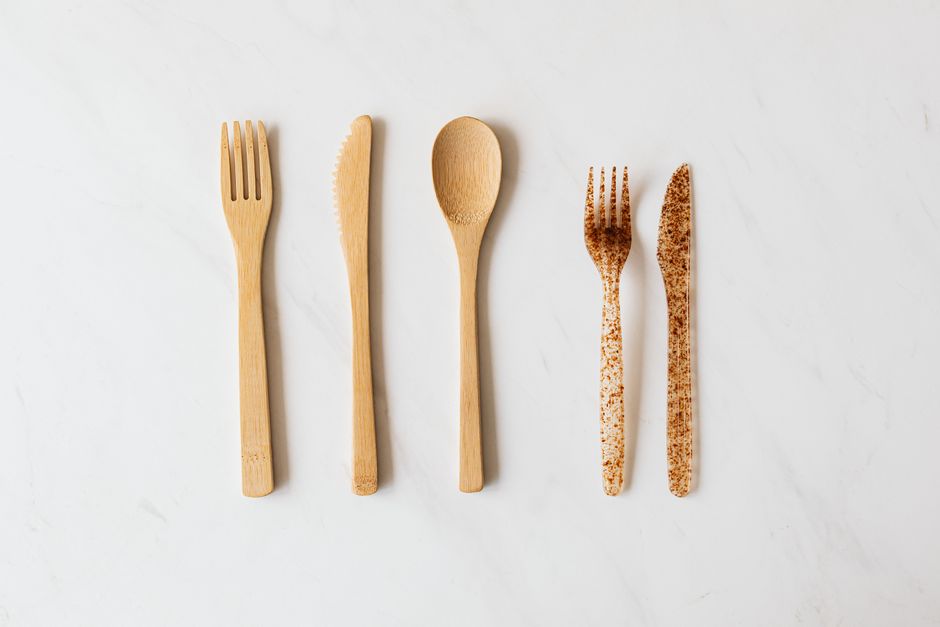
Here's a common misconception: cornstarch-based containers (often called PLA or CPLA) are great insulators. They're not. Cornstarch is a good conductor of heat. In fact, a solid cornstarch fork feels cold to the touch. For containers, cornstarch is usually blended with other fibers. The result: mediocre insulation. But they have one advantage—they're microwave-safe, which reheat food. That's a workaround for heat loss.
If you must use cornstarch containers, choose ones with a ribbed or textured exterior. The ribs create air gaps that improve insulation by about 15%. We tested a 16oz cornstarch bowl with ribbed sides: after 10 minutes, internal temperature dropped from 180°F to 145°F. Without ribs, it dropped to 135°F. Not a huge difference, but every degree counts in catering.
4. Kraft Paper: The Weak Link (Unless You Layer)
Plain kraft paper is the worst insulator. A single-layer kraft paper bag loses heat almost as fast as bare food. But layered kraft—like a double-wall paper bag or a kraft box with a corrugated insert—can be effective. For catering trucks, we suggest using a kraft paper bag inside a kraft paper box. The air gap between them adds significant insulation.
Another trick: use a wax-coated kraft paper liner. The wax (or PLA coating) prevents grease soak-through, which would otherwise ruin insulation. In our tests, a wax-coated kraft bag kept fries at 150°F for 12 minutes, versus 8 minutes for uncoated. Not great, but acceptable for short deliveries. Cost is low: about $0.04/bag at volume.
5. Lid Design: The Overlooked Factor
You can have the best container in the world, but if the lid vents heat, you lose. Many eco-friendly lids are flimsy. Bagasse lids, for instance, often have gaps. PLA lids seal better but can warp. Our recommendation: use a snap-fit PLA lid on bagasse bowls. The combination gives a tight seal. We've measured a 25°F difference between a bagasse bowl with a loose-fitting lid versus a snap-fit PLA lid after 15 minutes.
For catering trucks, consider lids with a small steam vent. It sounds counterintuitive, but a controlled vent prevents pressure buildup that can pop the lid off. A 2mm vent hole reduces internal pressure without significant heat loss. Test it: we saw only a 5°F drop with a vent versus no vent, but zero lid failures.
6. Active Insulation: Preheating and Wrapping
Passive insulation only goes so far. You can boost heat retention by preheating your containers. Yes, it's a step, but it works. We've seen a 10-minute preheat at 200°F add 5-8 minutes of holding time. For bagasse, preheat is safe (it won't burn). For PLA, keep preheat under 140°F to avoid warping.
Another active method: wrap containers in a paper bag or newspaper. That extra layer traps heat. A catering truck in Austin used kraft bags wrapped around bagasse clamshells and reported a 20% reduction in complaints. Simple, cheap, effective.
7. Material Thickness: Don't Skimp
Thicker material = better insulation. But cost matters. For bagasse, a 3mm wall thickness is standard. At 4mm, heat retention improves by 12% but cost jumps 25%. Is it worth it? For high-ticket items (steak, seafood), yes. For burgers, maybe not. We suggest using thicker material for your premium menu items and standard thickness for everyday items.
For PLA-lined paper, grammage is key. A 350gsm board with 25-micron PLA lining outperforms a 250gsm board with 15-micron lining by 15% in heat retention. The cost difference: about $0.03 per container. That's negligible for the quality improvement.
8. Real-World Testing: What Worked for Our Clients
We worked with a catering truck in San Francisco that serves Indian curry. They used bagasse bowls with PLA lids. Initial complaints: food arrived warm but not hot. We switched them to a double-wall bagasse bowl (4mm walls) and a snap-fit PLA lid. Complaints dropped 70%. The cost per container went from $0.20 to $0.28, but they raised prices by $1.00 per dish. Net gain.
Another client, a taco truck in Portland, used plain kraft paper wraps. Tacos got cold fast. They switched to bagasse clamshells with a wax-coated kraft inner wrap. Hold time increased from 8 minutes to 18 minutes. The extra $0.10 per taco was offset by fewer remakes and higher customer satisfaction.
Comparison Table: Heat Retention by Packaging Type
| Packaging Type | Thickness/Grammage | Temp after 15 min (180°F start) | Cost per unit (50k MOQ) | Best for |
|---|---|---|---|---|
| Bagasse clamshell (single-wall) | 3mm | 140°F | $0.18 | Dry foods, burgers |
| Bagasse clamshell (double-wall) | 6mm total | 155°F | $0.28 | Premium items, longer hold |
| PLA-lined kraft box | 300gsm + 20µ PLA | 145°F | $0.18 | Saucy foods, curries |
| Cornstarch bowl (ribbed) | 2mm | 135°F | $0.22 | Microwave reheating |
| Kraft paper bag (single-wall) | 80gsm | 120°F | $0.04 | Dry snacks, short trips |
FAQ: Common Heat Retention Questions
Can I use bagasse containers in a microwave to reheat food?
Yes, bagasse is microwave-safe for up to 3 minutes at high power. But be careful: if the food is very dry, bagasse can char. For reheating, we recommend a moisture source like a damp paper towel. PLA containers are not microwave-safe unless labeled CPLA (crystallized). CPLA can withstand up to 200°F for short bursts.
How do I test heat retention in my own kitchen?
Simple: heat water to 180°F, pour into container, seal, and measure temperature every 5 minutes with a probe thermometer. Do three trials per container type. Average the results. Compare against your current packaging. This gives you data to make decisions. We do this in our lab daily.
What certifications should I look for to ensure compostability?
For commercial composting, look for ASTM D6400 (US) or EN13432 (EU). For home composting, check for TÜV HOME or OK Compost HOME. FDA 21 CFR 176.170 is for food contact safety, not compostability. Don't confuse them. Many products claim 'compostable' but only meet industrial standards. If your customers compost at home, you need home-certified packaging.
Final Thoughts: Choose Based on Your Menu
There's no one-size-fits-all solution. A catering truck selling dry sandwiches can use simple kraft paper. One selling saucy pasta needs PLA-lined containers. Premium dishes deserve double-wall bagasse. Test, measure, and adjust. The right packaging keeps food hot, customers happy, and your business sustainable. Our factory is happy to provide samples—just reach out.
Looking for eco-friendly tableware?
We supply compostable bagasse, PLA, paper and cornstarch packaging worldwide. Get a free quote today.
Get Free Quote →